

The Avestan Alphabet: A Guide to its Pronunciation and Writing
The following document is a guide for the reading, writing, and pronunciation of the Avestan alphabet, primarily intended for the dedicated Zoroastrian. Although such resources have been completed in the past, they have been mainly based on outdated scholarship from the early 1900s. This document is not meant to be an academic argument for the pronunciation of the Avestan language, although I do intend to produce such a thing in the future, likely as part of a larger work. My sources for this document are primarily several conversations I had with Professor Martin Schwartz of UC Berkeley, An Introduction to Young Avestan: A Manual for Teaching and Learning by Alberto Cantera and Céline Redard, Introduction to Young Avestan by Javier Martínez and Michiel de Vaan, and Young Avestan Primer by Prods Oktor Skjærvø, although in large parts my arguments below are my own. The section on the proper writing and style of the script is largely based on the hundreds of hours I have spent reading and writing manuscripts.
Preface
The Avestan Script (Dēn Dibīrīh in Middle Persian, Dīn Dabīre in Modern Persian), is a remarkably complex writing system designed to accurately display the minute nuances of the pronunciation of the Avestan language. It runs right to left, being a descendant of Aramaic, and contains 15 vowels and 42 consonants, for a total of 57 consonants;[1] it distinguishes between short and long vowels and display allophones (that is, the same words/phonemes pronounced differently in different contexts). Unlike other writing systems, which seek to efficiently depict a language which the speaker already knows (often with many complexities of pronunciation left out), the Avestan Alphabet opts to accurately detail the exact sound of the language as it was understood by the scribes analyzing the language. In this sense, it is a true phonetic alphabet, likely the first of its kind, and it should be seen as a predecessor to the modern International Phonetic Alphabet (IPA).
The script, in its current form, was probably innovated sometime during (or more likely throughout) the Sasanid Dynasty as an attempt to accurately represent the holy language of the Avesta. It seemingly evolved from one of the many variants of Aramaic used during the Sasanid periods[2], although it may have had an antecedent script in the Parthian or Achaemenid Empires. The motivation for such a script, besides the writing of Avestan, seems to have multiple reasons. Firstly, there seems to be a clear penchant for phonological analysis among the original innovators of the script, reflecting an otherwise unattested linguistic science in the Sasanid Empire. However, as Avestan was the sacred, holy language of Iran, the scribes must have likewise felt a religious responsibility to truthfully transfer it into the written page, both with great attention to the accuracy in minute detail and in the beauty of the script.
To this effect, when properly written, the graphology of the script displays the recurrent shape a running through the center of the line, with variances extending above and below in many letters, thus representing the way in which the priests may have sung or recited Avestan, with high and low notes accentuating a sacred tone carried throughout. Although, I do admit such a notion is hypothetical.
The following document contains multiple sections. The first is a list of all the letters with their Latin transliterations and possible IPA equivalents. In this chart is also a guide for the pronunciation. Given how Avestan is a dead language, and the accurate pronunciation of it seems to have disappeared from the Zoroastrian priesthood sometime in the last 400 years, this should be treated as probable suggestions rather than the certain pronunciation, especially for the vowels. Following this section, there is a section on the writing of the script, showing my own handwriting (rather than the computer font) and some guidelines for the proper writing of the letters and how they correspond to each other. Finally, the last section is reading, which contains a few example texts along with suggestions on where one can find larger resources for reading Avestan. The digital fonts that are used are the Avestan and Pahlavi fonts of the Ancient Iranian Font Project by Emily Blanchard West in collaboration with William Malandra.[3]
Pronunciation
Vowels:
|
Avestan |
Latin |
IPA |
Pronunciation |
|
a |
a |
æ “near-open front unrounded vowel” |
short ‘a’ sound in bat or short ‘a’ in American English father. |
|
A |
ā |
ɑː “Open back unrounded vowel |
long ‘ah’ sound as in British English father, bath. |
|
v |
ə |
ə “mid central vowel” or ɛ “Open-mid front unrounded vowel” |
the schwa: short ‘uh’ sound in commit, banana. Or less likely the short ‘eh’ sound in bet, set. |
|
V |
ə̄ |
œː “Open-mid front rounded vowel” |
German Schön, French jeune. New Zealand English ‘bird’. |
|
l |
ā̊ |
aəː |
New York English coffee, store. Or perhaps velarized British and Australian English ɑː as in hawk, bawdy. |
|
L |
ą |
ãː “nasalized open front unrounded vowel” |
Nasalized ‘a’ sound in French ‘France’. |
|
& |
ə̨/ą̇ |
ɛ̃ or ә̃ |
Uncertain, may be similar to French pain ‘bread’ |
|
e |
e |
e “Close-mid front unrounded vowel” |
short ‘ey’ sound in late, fate, cane. |
|
E |
ē |
eː “Close-mid front unrounded vowel” |
long ‘ey’ sound as in made. |
|
o |
o |
ɔ “Open-mid back rounded vowel” |
lower ‘ah’ sound found in lord or north or in caught, bought in certain British and Northeastern American accents. |
|
O |
ō |
oː “close-mid back rounded vowel” |
long o sound in promote, boat. |
|
i |
i |
ɪ “Near-close unrounded vowel” or short i. |
‘ih’ sound as in fit, sit, pit. |
|
I |
ī |
iː “close front unrounded vowel” |
‘ee’ sound as in feed, lead. |
|
u |
u |
ʊ “near-close near-back rounded vowel” |
‘oul’ sound in could, put, book. |
|
U |
ū |
uː “Close back rounded vowel” |
‘oo’ sound in food, loot, rule. |
Consonants:
|
Avestan |
Latin |
IPA |
Pronunciation |
|
W / w |
v/uu |
w “voiced labial-velar approximant” |
‘w’ sound as in water, wait, wow. Not the ‘v’ sound in English. |
|
% / y |
y/ii |
j “voiced palatal approximant” |
‘y’ sound as in yes, yell, yay. |
|
Y |
ẏ |
Uncertain, probably palatalized ž/ʒ |
Variant of the ‘y’ sound that probably was pronounced close to the z in azure. |
|
Z |
ž |
ʒ “voiced palato-alveolar fricative” |
“zh” sound as in azure, vision. |
|
B |
β |
v “voiced labiodental fricative” / β “voiced bilabial fricative” |
‘v’ sound in van, move, vowel, or the sound in certain Spanish pronunciations of recibir |
|
r |
r |
r “voiced alveolar trill” |
trilled ‘r’ sound. Can be substituted with a regular r. |
|
|
l |
l “Voiced alveolar lateral approximant” |
L sound in laugh, long, tall. Doesn’t exist in Avestan. |
|
vrv |
ərə |
syllabic/vocalic r |
trilled ‘r’ acting as a vowel; this is one syllable. Sanskrit ṛ |
|
k |
k |
k “voiceless velar plosive” |
k sound in cat, kitchen. |
|
g/J |
g |
g “voiced velar plosive” |
g sound in good, green, fog. |
|
|
ġ |
ɟ/ɡʲ “voiced palatal plosive” |
Like a g sound but pronounced on the palate, that is closer to the teeth than a normal g. Almost sounds like ‘gy’ |
|
d |
d |
d̪ “Voiced dental plosive” |
similar to the d sound in dog but pronounced with the tongue on the back of the teeth rather than the ridge above, as in Persian. |
|
D |
δ |
ð “voiced dental fricative” |
“th” sound in that, then, thought (not thin). |
|
q |
θ |
θ “voiceless dental fricative” |
“th” sound in path, thin, Athens. |
|
p |
p |
p “voiceless bilabial plosive” |
p sound in pan, pop, map. |
|
f |
f |
f “voiceless labiodental fricative” |
f sound in father, fan, laugh. |
|
h |
h |
h “voiceless glottal fricative” |
h sound in hat, hair. It is never silent, save for ‘hr’. |
|
x |
x |
x “voiceless velar fricative” |
Not present in English, save for Scottish loch, Glenfiddich. Also German Nacht, Persian Khoda. |
|
X |
xw |
ʍ/xw “voiceless labial–velar fricative” |
‘x’ sound plus ‘w’. |
|
F |
x́ |
xʲ “palatalized voiceless velar fricative” |
The x/kh sound raised to the palate in anticipation of /y/. |
|
G |
ɣ |
ɣ “voiced velar fricative” |
Voiced version of x, not pronounced in the throat. |
|
c |
c |
t͡s Voiceless alveolar affricate |
Probably the ‘ts’ sound in English hats, cats and German z in Zeit, zahlen. Can also be pronounced like ‘ch’ in cheese, match. |
|
j |
j |
d͡z Voiced alveolar affricate |
Similar to the ‘ds’ sound at the end of a word such as rads, fads, lads. Can also be pronounced like the j in judge, jam. |
|
t |
t |
t̪ “voiceless dental plosive” |
similar to the ‘t’ sound in tin but pronounced with the tongue on the teeth. Never the tapped ‘t’ in bottom or the glottal ‘t’ in glottal. |
|
T |
t̰ |
(?) |
t̰ functional the same as ‘t’ but was likely pronounced somewhere between a ‘t’ and a ‘δ’. |
|
s |
s |
s “voiceless alveolar fricative” |
s sound in sit, mess, sincere. |
|
S |
š |
ʃ “voiceless postalveolar fricative” |
‘sh’ sound in shin, fresh, shush. |
|
K |
š́ |
(?) ɕ “voiceless alveolo-palatal fricative” / ç “voiceless palatal fricative” |
pronounced like a “sharp” ‘sh’ sound. This appears where there used to be a ‘cii’ or ‘c’ sound. |
|
C |
ṣ̌ |
r̥ʃ |
pronounced like a voiceless or breathy trilled ‘r leading into a ‘sh’ or ç sound. Appears where there used to be an ‘rt’ sound. |
|
rh |
hr |
r̥ “voiceless alveolar trill” |
pronounced like a trilled ‘r’ with no voice. |
|
vV |
ə̄ə |
ʕ “Voiced pharyngeal fricative” |
Possibly just a recitational feature in the Gathas; if not, it could be pronounced like a breathy direct and open amount of sound in the larynx. |
|
n |
n |
n “voiced alveolar nasal” |
n sound in no, pan, none. |
 |
ń |
ɲ “voiced palatal nasal” |
Spanish ñ sound in español, año. |
|
N |
ṇ |
? |
variant of n of uncertain sound. Appears before stops like p, k, g, t, d. |
|
m |
m |
m “voiced bilabial nasal” |
m sound in mat, ham, mom. |
|
|
m̨ |
m̥ “Voiceless bilabial nasal” |
pronounced like hmm in English. |
|
M |
ŋ |
ŋ “voiced velar nasal” |
ng sound in singing or playing |
|
|
ŋv |
ŋʷ “labialized voiced velar nasal” |
pronounced like ŋ but with the lips rounded almost making an ‘oo’ sound. |
|
? |
ŋ́ |
ŋʲ “palatalized voiced velar nasal” |
pronounced like ŋ but slightly raised into an ‘ee’ sound. |
|
b |
b |
b “voiced bilabial plosive” |
‘b’ sound as in boy, knob, bib. |
|
z |
z |
z “voiced alveolar fricative” |
‘z’ sound as in zone, plaza, xylophone. |

Diphthongs:
Note: Diphthongs are the combinations of two vowels to make a single sound. Vowel combinations such as aē or aō (Ea or Oa), along with all others below, should be pronounced as a single sound and syllable, not like two separate sounds. Avestan inherits from Proto-Indo-European a short – long distinction in its diphthongs similar to the vowels.
|
Avestan |
Latin |
IPA |
Pronunciation |
|
Ea |
aē |
aɪ |
Short ‘eye’ diphthong in shy, fight, iron. |
|
iA |
āi |
aɪː |
Long ‘eye’ diphthong. |
|
Oa/oa |
aō |
aʊ |
Short ‘ow’ diphthong in cow, now, found. |
|
uA |
āu |
aʊː |
Long ‘ow’ diphthong. |
|
uV |
ə̄u |
œʊ̯ |
This is a Gathic form of aō. Likely pronounced similar to RP British ‘o’ (əʊ) in no, goat but with the distinction of œ vs ə. |
|
iO |
ōi |
oɪ |
Pronounced like boy, toy, foible in English. |
Common mispronunciations
|
Avestan |
Latin |
Correct Pronunciation |
|
mh yh |
hm hy |
the h is pronounced before the y/m; it is not silent or part of the preceding vowel |
|
rd |
dr- |
is not pronounced like ‘jr-’ as almost all native English speakers will be tempted to do. For instance, druj is pronounced “d’ruj” not “jruj”. |
|
rt |
tr- |
is not pronounced like ‘chr-’ as most English speakers will do (except for certain accents). For example, it is pronounced “zarathusht’ra” not “zarathushchra”. The reason for most English speakers pronouncing ‘tr’ and ‘dr’ this way is due to the unusual ‘r’ sound we have (i.e. General American IPA ɹ̠ʷ voiced postalveolar approximant). |
|
,A- |
-ā |
word final a/ā is not pronounced ‘uh/ə’ (such as nirvana/banana) |
|
E |
ē |
Most English speakers pronounce this vowel as a diphthong as in ‘hay’ IPA /heɪ/, as they will round this vowel with a glide. Pronouncing it correctly will feel similar to cutting the sound off short. The Spanish ‘e’, such as José, is a good example. |
|
O |
ō |
just like with ‘e’, English speakers round this off with a glide. Similarly, pronouncing it correctly will feel like cutting it off short; mimicking the Spanish pronunciation will help. |
|
o |
o |
For many American speakers, this vowel has been merged with ‘a’ and can’t be distinguished easily in listening to speakers who have the vowel. The correct vowel is ɔ (look up the IPA vowel). This difference is called the caught-bought merger. |
|
l |
ā̊ |
this is not “ow” or “a’o” as many mobeds today pronounce it. |
|
W |
v |
The ‘w’ sound not the ‘v’ sound in English. Due to academic transliteration using the Latin V (which only made the ‘w’ or ‘u’ sounds), most English speakers think of this as an English ‘v’. |
|
L |
ą |
This can be imitated from French (see https://en.wikipedia.org/wiki/Nasalization), otherwise it should be substituted with a/ā. |
|
vrv |
ərə |
Often spelled ‘ere’ and pronounced as such. This is a trilled, syllabic r and will be very difficult for English speakers to pronounce. For those unable to roll their r’s, it is best pronounced as American ‘er’ (as in player, circle, murder). |
|
M |
ŋ |
Often spelled ‘ng’. The ‘g’ sound should not be pronounced. |
|
|
ŋv |
Often misspelled -ngu- as in “vanguhi”. This consonant is M labialized, meaning it is pronounced with the lips rounded. As this is a hard sound for English speakers to make, it can be substituted for M by most people. This should not be pronounced as -ŋu- (‘-ngoo-’) |
|
? |
ŋ́ |
This is an example of palatalization, a linguistic feature not in English, but it can be found in Russian. Like previously, this can be pronounced like M as this distinction is likely secondary. |
|
iA ia |
āi, ai |
This is a single sound/syllable, it should not be pronounced “aa ee”. Both of these can be pronounced like “eye” by the average person. |
|
-uV- |
-ə̄u- |
Often misspelled -êu-. It should not be pronounced “ey oo” or “eh oo”. If this diphthong can’t be pronounced, it would be best substituted with “ow” (āu). |
|
C K |
š́, ṣ̌ |
For the average person, these would be best substituted with the typical ‘sh’ sound. |
|
Sx nSx |
xš-, xšn- |
This sound combination will be hard for speakers of nearly any language. The ‘x/kh’ sound should be rather light, not over enunciated, so that it doesn’t force the speaker to turn this consonant combination into two syllables. |
Discussion on the pronunciation
Vowels:
a A: the value of these isn’t entirely certain. Some consider both to have the value of æ. However, I am against this opinion internally in Avestan, as a often becomes colored to o in contact with W/w or r, such as in -uruop, mIwruop, -uhoW. This feature leads me to believe that a = a and o = ɔ. As for A, I believe ɑː is appropriate, or perhaps even aː.
o O: As discussed above, I believe o was likely pronounced ɔ, although pronouncing it like a short o is no great deal. I don’t see any reason to doubt that O = oː.
i I: I clearly represents iː, however i could represent either i or ɪ.
u U: Again, U clearly represents uː, but u could be either u or ʊ.
v V: Of all the vowels, the case here is very contentious. As v is borrowed from Greek, the value of ɛ, ɛː would not be unreasonable. However, the use of this letter in Avestan heavily indicates a schwa, ə. Subsequently, V represents œː or less likely ʌ/əː (as in English strut). It should be noted that in Pazand, v/V is exclusively used for (middle) Persian e, /ɛ/;[4] moreover, in Avestan orthography, v (V after word final r) is often used to represent an inserted sound vowel between consonant clusters that letter non-native Avestan reciters could not pronounce. This raises many questions that can’t be easily answered here. What is true is that either the scribes were aware that v represented /ə/ in Avestan and /ɛ/ in Greek and Pazand (with perhaps v representing /ɛ/ in anaptyctic situations and /ə/ in Avestan ones) or that Avestan /ə/ had been fully realized as /ɛ/ by the reciters in the latter half of the Sasanid Dynasty.
e E: The complete lack of the usage of this letter in writing Pazand (ibid.) leads me to believe both are distinct from Persian e, /ɛ/. I think they have the same value as e and eː.
Consonants:
The letters below deserve special consideration, the rest are self-evident, for the most part.
r: this is most likely a trilled r. There is a possibility it could have been tapped in certain environments, but there is no specific indication of this.
vrv: This is undoubtedly a syllabic r (a trilled r used as a syllable) as it usually corresponds with syllabic r in Old Persian and Sanskrit. This pronunciation will be very hard for most people, especially English speakers. Regardless, it must be pronounced as a single syllable.
q Q, : Both these letters are typically considered as stylistic variants of the same letter, but there is a chance this is an oversimplification as many manuscripts (mainly Indian) show an uncertain distribution between the two letters. q certainly represents a voiceless dental fricative, but that raises the question of Q. I would propose perhaps an aspirated t (th) as an evolution from proto-Iranian /tH/, although this requires more dedicated study.
T: This has often been debated as whether it is a fricative or an unreleased ‘t’ (cf. English t at the end of words, cat, bat, hat, etc.). However, this letter is etymologically related to ‘d’ in words like -aSEabT -aSEakT and in Pāzand is used to represent word final d.[5] I follow Schwartz’ suggestion that it is probably pronounced somewhere between d and ð.
j c: these letters, c and j, are typically pronounced like cheese and job. They are probably more accurately pronounced as such: c = t͡s as in cats and j = d͡z in fads. This way is more accurate, but the former way is fine for most people.
C rh K: C has for some time been known to be a letter specifically designed for the evolution of the /rt/ sequence in Avestan. How it was exactly pronounced isn’t certain, but something like a voiceless trilled ‘r’ leading into a ‘sh’ sound. To this point, the letter sequence rh in words like -aprhvk ‘form, body’, -akrhvW ‘wolf’ describes a voiceless ‘r’. The value of K is also uncertain, maybe similar to german ich, Licht.
N: I am unsure of how this should be pronounced. Stylistically it resembles the nasal vowels &, L but in Pāzand it is often used as a ligature of ‘an’. As of now I am unsure of the specifics of this letter, but etymologically it is an ‘n’.
Writing
For the time being, I am unable to design a full lesson plan that teaches the Avestan script. I have put together a sort of guide on the proper writing of the script. To this point, there are a few principles of writing in Avestan that must be covered. Each line of Avestan has the shapes a A (the most common Avestan vowel) running through the center; I call this the middle register. Coordinating with these two are a number of other letters which integrate this shape into their form. These are l L & e E Y h x X F c j S K C. A critical skill to learn for proper writing is to ensure all the a A shapes are of the same size and on the same level.
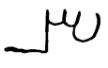
While a few vowel letters exist only in the middle register (e.g. a l I), the majority of letters are formed in middle register and extend into the lower register (eg. S h k). A few, such as r o, begin in the middle register and extend into upper register, and conversely, a few begin in the middle register and extend through the lower register into the bottom register (b z d). These two groups are to give the impression of the letters stretching out of the line. Finally, there are a few letters which exist only in the lower register (e.g. v M) typically representing sounds inserted in the pronunciation. Below is a chart of where all the letters place in the registers, letters which occasionally have flourishes which extend them further are not accounted here but is mentioned later.
From here on, scanned version of my own handwriting will be used. A comparison chart between my handwriting in the font can be seen in the chart following the one below. Given that they are scanned pictures, individual letters next to each other may be imperfectly aligned; please refer to the guide on writing and my example text of Y 31 for how the letters relate to each other.
Letters as they place in the register:
Middle register:
 |
 |
 |
 |
 |
 |
 |
Middle-Upper register:
 |
 |
 |
 |
 |
 |
 |
Middle-Lower register:
 |
 |
 |
 |
 |
 |
 |
 |
 |
 |
 |
 |
 |
 |
 |
 |
 |
 |
 |
 |
 |
 |
 |
 |
 |
 |
 |
 |
 |
 |
 |
 |
|
 |
 |
 |
Middle-bottom register:
 |
 |
 |
 |
 |
 |
Lower register:
 |
 |
 |
 |
My handwriting vs font:
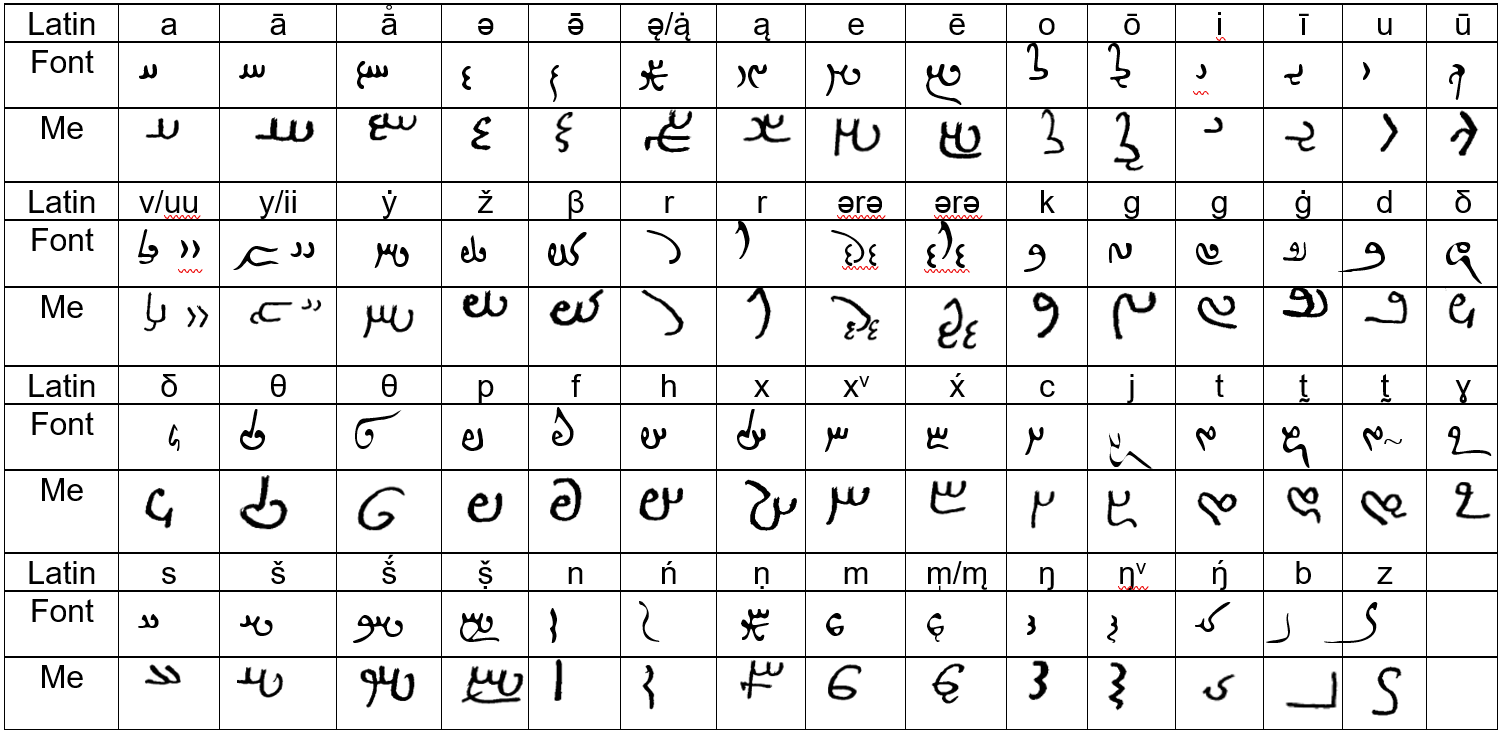
Instructions on writing:
|
Avestan |
Variant |
Latin |
Writing |
|
a |
For this letter, one must start at the top right and draw a u motion, temporarily stopping at the top. From there, retrace to the bottom of the loop and draw a small tail to the left, prepping for the following letter. |
|
|
ā |
Similar to the previous letter but with an extra loop. Try to ensure each loop is of the same size as each other and other a letters as the act of doubling tends to unconsciously cause one to shrink the size. |
|
|
ā̊ |
Again, similar to the previous letters. With the connected epsilon, immediately extend the tail to the center, then forming the top before looping back down to the bottom. Sometimes this is written as two separate letters (including in the oldest manuscript K7), which is likely its origin as a sort of diphthong. |
|
|
ə̨/ą̇ |
For this letter, start with a normal a, then form the large hook immediately with a flourish without forming the tail. From here, make the cross to finish the letter, starting from the right and finishing at the left end of the letter, placing them close to the start of the next letter. Should only extend to the lower register. |
|
|
|
ą |
Start with a normal a, then make a curved semi-circle like before, then mirror it to complete the letter. Alternately, you can immediately go to the bottom left after the a, then cross it from bottom right to top left. Should only extend to the lower register. |
|
|
c |
Start with a normal a, then, after reaching the top left, make a downstroke to the lower register. |
|
|
j |
Exactly like the previous letter but make a small tail/flourish after the downstroke. It can be subtle or pronounced into the lower register. Some manuscripts have the tail extended underneath previous words. |
|
 |
|
xv |
Form an A, then make a downstroke to the lower register. The downstroke can be straight but it is more proper to have a slight curve to the left. |
|
x́ |
Similar to the previous later, but after completing half of the down stroke, make a curve to the right. |
|
|
h |
Make an a, then drop down and make a large loop. The top left should be of equal height with the a. Then finish with a small loop. |
|
|
x |
Same as previous letter, but after reaching the end of the large loop, make small curve inwards before forming a large flourish. There are a lot of liberties one can have with this flourish, making it extend far into the upper register. |
|
|
p |
Form the loop and circle of h without the a shape at the beginning. |
|
|
f |
Start in the upper register on the left where you expect the letter to end, form a more pronounced loop that ends in a small circle at the top of the middle register. |
|
|
n |
This is a single downstroke which extends from the top of the middle register to the bottom of the lower register. |
|
|
ń |
Practically a curvy n. The curves shouldn’t be too pronounced as to distinguish it from z. |
|
|
ṇ |
Can be formed like X with a crossbar. Sometimes it resembles & with a double loop like so N. |
|
|
e |
For this letter, start with a point at the top of the middle register and form a large loop extending into the lower register that then leads into an a shape. At the top left of the a, make a downstroke. |
|
|
ē |
Similar to the previous letter, but before making the downstroke, make a curve that extends across the bottom of the whole letter. |
|
|
ẏ |
Similar to e but form an extra loop. The downstroke can be straight or slightly curved like X. |
|
|
š |
Similar to e but no downstroke. |
|
|
|
š́ |
Form a S, then make a circle that extend down at a curve that ends at the edge of the loop in the lower register. For the variant, from a Y, then make a downstroke that goes into the bottom register, follow this with a side stroke to the left. |
|
|
ṣ̌ |
Form a Y but make a curve underneath like E. it is customary to make a small cross mark on the curve. |
|
|
i |
Make a small curve shape starting in the top left that should occupy the same height on the middle register as a. |
|
|
ī |
Similar to the previous letter but with a small tail to indicate length. Depending on the fineness of ones’ pen, making the bottom stroke of the i larger may be required. |
|
|
|
s |
Make a double i shape; after completing the first i, immediately go upwards to the top of the second i, then loop down to finish. It should occupy the same space on the middle register as a, although one often finds it occupying the middle and lower register. For the variant, start at the bottom of the first circle on the right, form it to the left and circle into a line extending to the bottom of the lower register. Extend a side stroke to the left, then trace backwards on the line and extend a line upwards that forms a circle. |
|
|
ġ |
Formed similarly to the variant above, but with only one circle on the left. |
|
|
ŋ́ |
Make a short dash at the left that leads into a little loop with a tiny flourish from the lifting of the pen. Should extend from the bottom of the upper register into the middle register. |
|
|
|
g |
For this letter, make a smaller loop in the middle register that curves up before making a slightly smaller concave loop. The end of the second loop should either extend straight downwards or underneath the whole letter, both stopping in the lower register. |
|
 |
y |
Start at the top right in the middle register with a straight line that curves down into the lower register, then a make another line that goes halfway back to the first. Finish with a small tail on the middle left. There is a variant with a rounder shape, but the first is the proper, albeit archaic way. |
|
v |
Similar to the last letter but flipped 90 degrees. Start on the right with the shorter leg. |
|
|
 |
u |
Start at the top of the middle register and make a shallow arrow shape that extends to the bottom of the lower register. The point is typically directly in the middle of the letter, but on rare occasions one may see the point much closer to the top, similar to Aramaic vav. |
 |
|
ū |
Form a u with a long tail coming out the center. The proportions of this letter tend to get very distorted in the manuscript tradition. |
|
t |
Start at the top left of the circle, then form it in a clockwise direction. Upon closing the circle go to the top left before curving back in to complete the letter. Should extend from the middle to the lower register. |
|
|
|
t̰ |
Form a t, then either add a flourish at the very end, similar to j, or lift the pen and add a small tail on the circle. |
|
m |
Start at the top and make a large C shape which extends from the middle to lower register. Close off the shape with a small oval loop. |
|
|
m̩/m̨ |
Add a small tail to the bottom of the m. |
|
|
|
δ |
Start at the bottom left, make short mark that sharply cuts back in before forming a c shape. Alternately can be closed off with a circle or not. Should extend across the lower and middle registers. |
|
k |
Start at the bottom left of the circle and complete it counterclockwise before extending down to the bottom of the lower register in a shallow curve. The end of the curve shouldn’t extend further left then the circle. |
|
|
d |
Formed similar to k, but after forming the circle go straight down into the bottom register and then form a straight line to the left far past the circle. Often, several letters sit on the tail of this one. |
|
|
b |
Form a downstroke from the top of the middle register into the bottom register, then make a large stroke to the left akin to d. |
|
|
|
z |
Form a curve in the middle register than a convex one in the lower register. Alternately it can have a tail extending into the bottom register. |
|
ɣ |
Make a long horizontal line in the bottom register, then make a straight line up into the middle register that finishes in a circle. |
|
|
ž |
Start in the lower register and make a small loop with a left side that extends into the upper register; repeat the loop on the other side and finish with a small circle. |
|
|
|
β |
Similar to Z, but with a mark leading into it. |
|
|
ə |
This letter is identical to Greek epsilon. Should be fully in the lower register along with all variants. |
|
|
ə̄ |
Upon finishing the bottom part of the epsilon, form a curve that lead into a tail. |
|
|
ŋ |
This is a v flipped backwards. |
|
|
ŋv |
This is a backwards V. |
|
|
o |
Start at the top of the upper register form a small curve before make a slightly curved line down to the top of the middle register. Then form a rough loop. The bottom of this letter should be at the bottom of the middle register and should not extend into the middle register. |
|
|
ō |
Formed with a tail at the bottom of o. |
|
|
|
r |
Make a sharp curve from the bottom of the middle register to the top of the upper register. This curve should be very pronounced, like in the Iranian tradition, but the Indian tradition tends to have a very shallow curve in comparison. One can start at the top or bottom, the bottom makes it easier to produce an aesthetic curve, but the top is more proper, and allows one to make ligatures. |
|
|
 |
l |
This is similar to the letter above but with either a tail or circle on the back. Can be formed with a shallow or sharp curve depending on preference. |
|
|
θ |
Start in the middle register and make a medium sized circle that cuts in before shooting into the upper register. The final tail can often be exaggerated. The variant, which is possibly a separate letter, can either be started from the top, in the upper register, or the interior spiral, in the middle. |
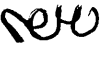
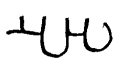
Ligatures:
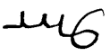
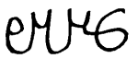
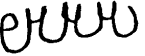
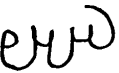
Ligatures are of secondary innovation and are not part of the script, but they are useful to be aware of. The final three ligatures in the chart are just examples of how the ligatures can combine, but they are more examples.
|
|
ra |
|
rā |
|
rə |
|
rt |
|
|
št |
|
ša |
|
šc |
|
ah |
|
|
ma |
|
mā |
|
mi |
|
mī |
|
|
am |
|
ām |
|
im |
|
īm |
|
|
zd |
|
mah |
|
šah |
|
rah |






Proposed letters:
|
Letter |
Latin |
Explanation |
|
|
ṛ |
Given that depicting the vocalic r as is somewhat unwieldy, I have proposed this letter (just an r with a tail) as an alternative. |
|
|
ʔ |
This is a straight line covering the upper register I propose as one possible way to display the glottal stop in Gathic. For example:
|
|
|
a’a ā’a a’ā ā’ā |
This is a ligature borrowed from Pahlavi that I propose as a way to display the intervocalic glottal stop in the Gathas. It can have a or ā on either side. For Examples:
|


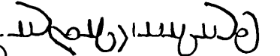 or
or 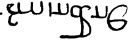 .
.

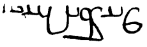
Reading
Yasna 31 my handwriting :
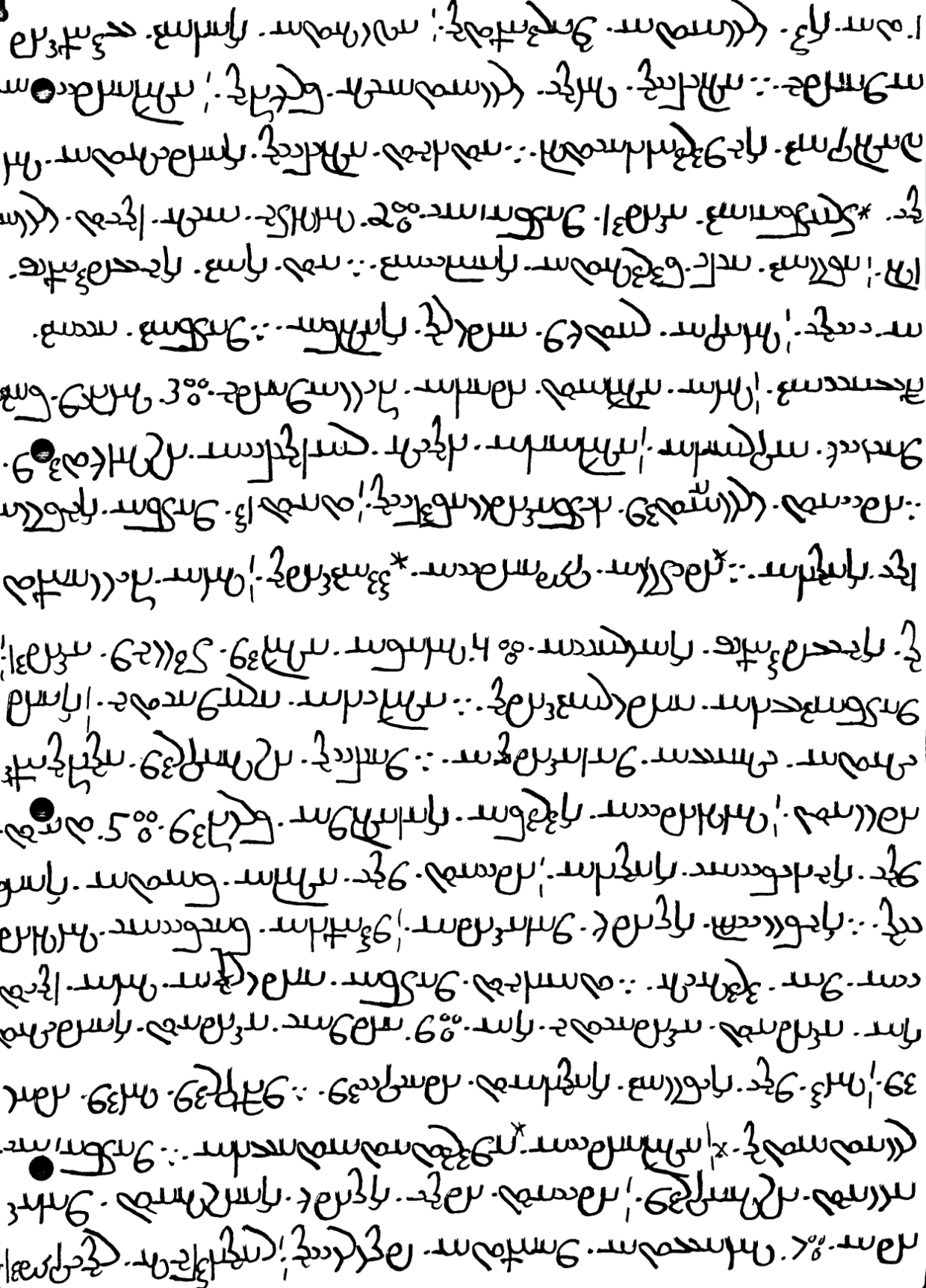
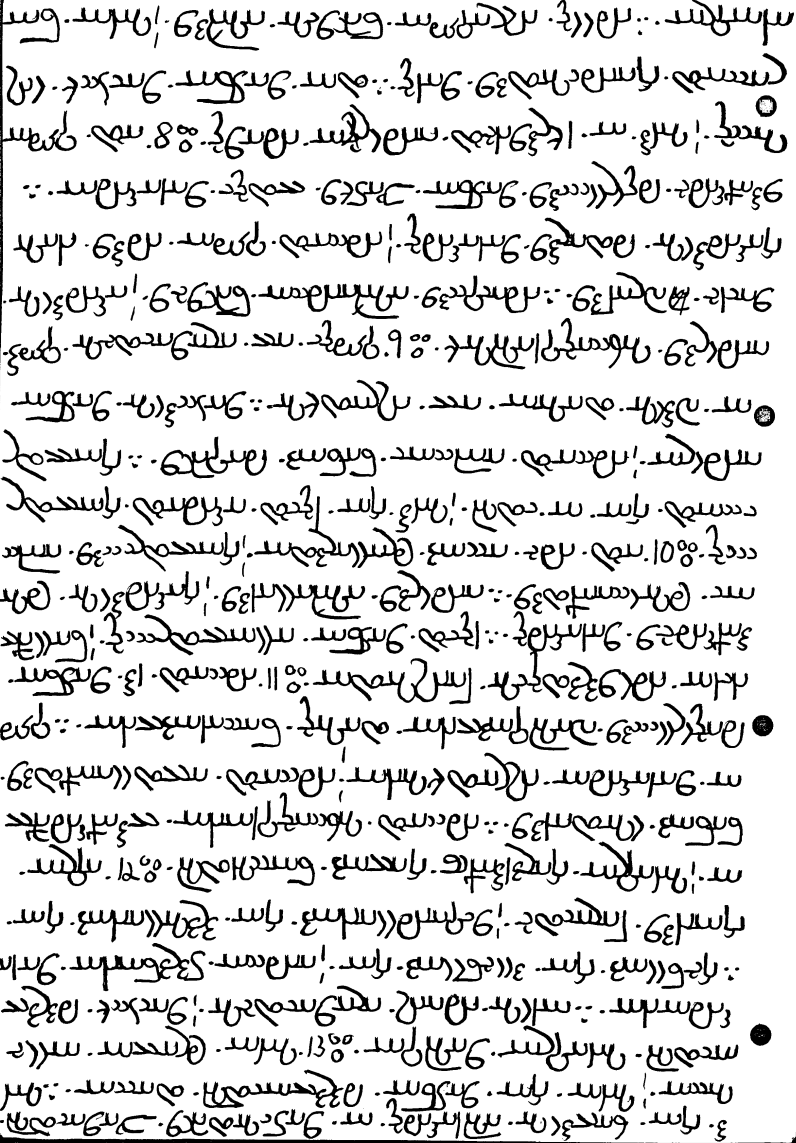
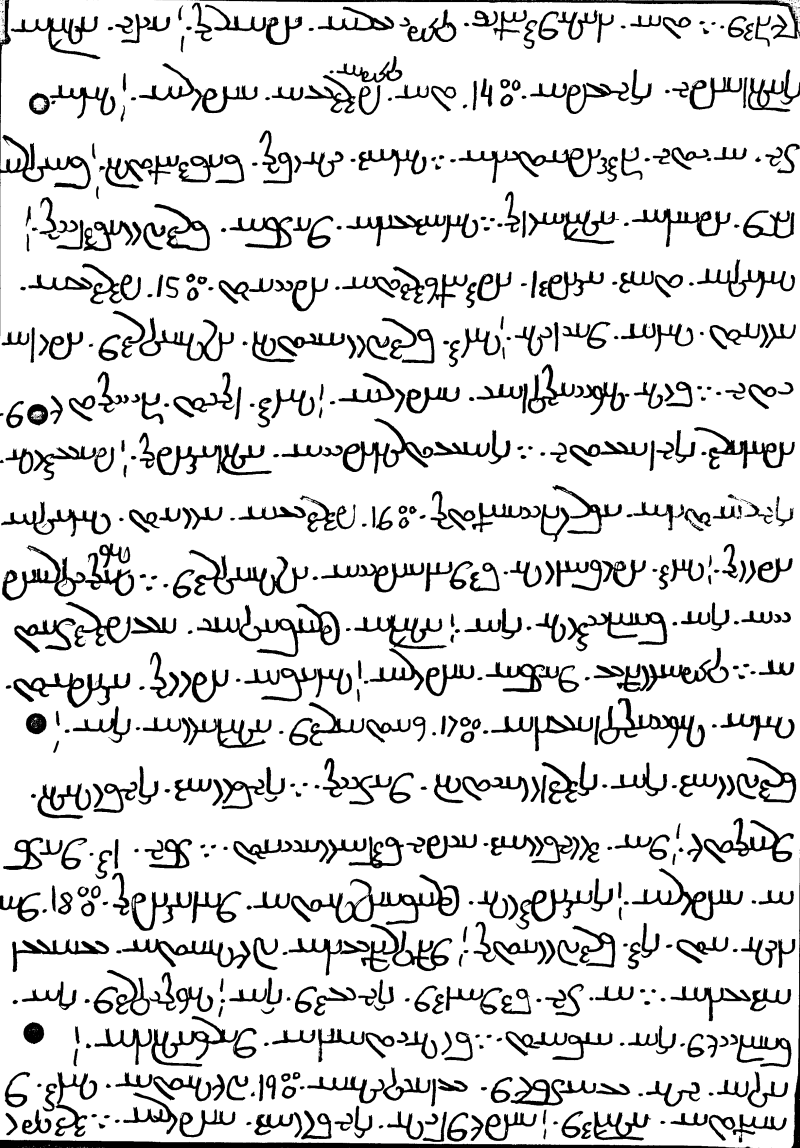
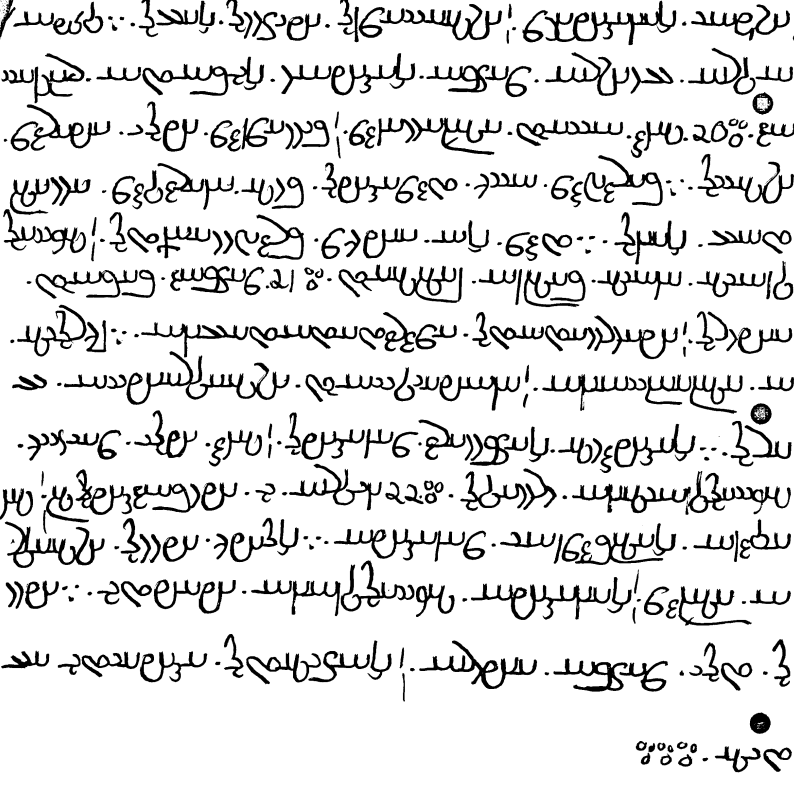
For self-learning, I recommend spending some time writing each letter independently, before writing combinations of letters to make sounds and words that one is aware of. From here, I recommend reading through the Gathas, either on our website or the Gatha transliteration document in resources which has the Avestan script at the end. The copy of my own writing of Yasna 31 above can also be a good resource to practice reading. One can also find many digitized Avestan manuscripts on the Avestan Digital Archive (https://ada.geschkult.fu-berlin.de/) often with transliterations. However, reading manuscripts can be very challenging early on; so, I don’t recommend this resource until the script feels more natural.
Sources I tentatively recommend are the Sacred Book of the Parsis by Karl F. Geldner, pg.9-17 of Teach Yourself Avesta by Ramiyar Karanjia (here), https://www.avesta.org/ which has the Avestan script versions of the Yasna, Vendidad, Yashts (Listed as “Khordeh Avesta”), and Vispered. The issue with these three sources is that they follow a standard of false orthographic rules created by Geldner when he was compiling all the manuscripts. Most significantly in these rules, the three S letters are treated as such: C in the middle of a word; s at the end of a word or when followed by t and c; and K when followed by y. Also, the two nasal vowels L and & are not distinguished, and Y is used exclusively while % is never used. As such, one may be somewhat misled on the true nature of the Avestan script by relying exclusively on these sources.
Alternatively, one can practice reading many Pāzand texts (Middle and Modern Persian written in the Avestan alphabet) in Pâzend Texts by Ervad Edalji Kersâspji Antiâ. One needs to keep a few things in mind. Firstly, the majority of the Pāzand texts are in an odd variety of late Middle Persian that does not have a standardized spelling and likely represents a Gujarati accent of the words, so many of the words can seem as if they are very misspelled. Secondly, the spelling conventions for Pāzand are somewhat different than in Avestan; so, reading Pāzand texts early on can make things a tad confusing.
Reading Examples
Yasna 51.22:
Avestan:
`,Itiap ,EnseY ,mvtSihaW `,Acah ,TACa ,iOm ,AyheY
`,AcitNvh ,AcvrahMl ,iOY `,Oruha ,ldzam ,AdEaW
.,AtNaW ,iAsaj ,Aciriap `,SInVmAn ,SiAX ,iAzaY ,Lt
Latin:
ẏehiiā mōi aṣ̌āt̰ hacā vahištəm ẏesnē paitī
vaēdā mazdā̊ ahurō ẏōi ā̊ŋharə̄cā həṇticā
tą ẏazāi xᵛāiš nāmə̄nīš pairicā jasāi vaṇtā
Translation:
In whose each and every celebration is there the best for me on account of Asha?
I have known it to be Divine Wisdom, as well as those who exist and have existed
These would I celebrate with their own names and serve with love.
Avestan text:
Haptanghaiti 2 (Yasna 36)
,Aruha ,Adzam ,EdiamAsaj,Iriap ,EyuruOap ,AnVzvrvW ,OrqA ,ABq ,Ayha 1
.,EhMld ,iOyOtxa ,mVY ,iAmha ,Sitxa ,A ,VY ,AtSinVps ,Uyniam ,ABq ,ABq
,Ayharuha ,ldzam ,vratA ,lymaj,Itiap ,AyAtA% ,ln ,Owh ,OtSizAwru 2
.,lymaj,Itiap ,mLhMlY ,iAtSizam ,ln,AhMamvn ,AyhatSimLn ,AyzAwru ,AyhatSizAwru
,Iha ,OtSinVps ,Ayha ,iOW ,Suyniam ,Iha ,Ayharuha ,ldzam ,iOW ,SratA 3
,ABq,At ,Ayharuha ,ldzam ,vratA ,mvtSizAW ,mLnamAn ,iOt,AW ,Tayh
.,EdiamAsaj,iriap
,SiOtsic ,ABq ,lyuhMaW ,ACa ,ABq ,UhoW ,AhManam ,ABq ,UhoW 4
.,EdiamAsaj,iriap ,AcSIbVcaW ,AcSiAnaqOayK
`,Aruha ,Adzam ,ABq ,IhamAydiUSi ,IhamAyFamvn 5
,SiAtSrawh ,SiApsIW ,SiAtxUh ,SiApsIW ,SiAtamuh ,ABq ,SiApsIW
.,EdiamAsaj,iriap
,Ami ,Aruha ,Adzam ,IhamayadEawA ,mLprhvk ,mVprhvk ,iOt ,Ta ,mLtSEars 6
.,IcAwa ,Vrawh ,TAY ,Tawa ,mLnamizvrab ,mvtSizvrab ,lcOar
To be, or not to be from Hamlet (based on my modern English pronunciation, R for /L/):
`,nVcsewk VD ,zi ,taD `,Ib ,Ut ,tAn ,ro ,Ib ,Ut
,rvfVs ,Ut ,dnEam ,ID ,ni ,rvRbuOn ,sit ,rvDeW
`,nUcrof ,sVjiErtOa ,BV ,zOriE ,dn& ,zMIRs ,VD
,zRvbVrc ,BV ,Is ,V ,tsnigv ,zmrA ,kiEt ,Ut ,ro
`,pIRs ,Ut—,iAd ,Ut .,miD ,dni ,vIzuOpv ,iAb ,dn&
,dni ,IW ,iEs ,Ut ,pIRs ,V ,iAb ,dn& `,rom ,uOn
,skAS ,Rvrvcan ,dnizOaD ,ID ,dn& ,kiE,trAh ,ID
,nVSiEmUsnAk ,V ,sit `,Ut ,riE ,zi ,SeRf ,taD
`,pIRs ,Ut `,iAd ,Ut .,dSiW ,Ib ,Ut ,IRtOaBvd
`,bVr ,VD zriED `,iA—,mIrj ,Ut ,sn&crvp `,pIRs ,Ut
`,mVk ,iEm ,zmIrj ,tVW ,qed BV ,pIRs ,taD ,ni ,rof
`,RiOk ,Rvtrom ,siD ,fA ,dRvfVS ,Bah ,IW ,niW
,tkepsIr ,VD ,zriED—,zAp ,sV ,Big ,tsVm
.,fEaR ,MAR ,uOs fV ,Itvm&Rvk ,skiEm ,taD
`,mEat ,BV ,znroks ,dn& ,spiW ,ID ,riEb ,duW ,Uh ,rof
`,IRmUtnAk ,zn&m ,dOarp ,VD `,MAr ,zrvserpuO’D
`,iERvd ,zAR ,ID `,BVr, dzEarpsid ,BV ,zMiEp ,VD
,snrvps ,ID ,dn& `,sifA ,BV ,sniROsni ,ID
`,skiEt ,IDrvwnV’D ,BV ,tiriEm ,tniSiEp ,taD
,kiEm ,suti’Eawk ,zih ,tEam ,fResmih ,Ih ,niW
`,riEb ,zRvdrAf ,duW ,Uh ?,nikdAb ,riEb ,v ,qiW
`,fEaR ,IrIW ,V ,rvdnV ,tews ,dn& ,tnVrg ,Ut
`,qed ,rvtfa ,MIqmVs ,BV ,derj ,vD ,taD ,tVb
,nrob ,zUh ,mVrf `,IrcnVk ,drvBVksidnV ,ID
`,RiW ,VD ,zrvzVp `,znrvtIr ,rvRvBarc ,uOn
,Bah ,IW ,zRi ,zuOD ,riEb ,rvDar ,sV ,skiEm ,dn&
,BV ,tAn ,uOn ,IW ,taD ,zrvdV ,Ut ,iARf ,niD
`,RA ,sV ,BV ,zdrv’Oak ,kiEm ,qAd ,sniSnAk ,sVD
,nVSURvzer ,BV ,Uyh ,BitiEn ,vD ,sVD ,dn&
`,tAq ,BV ,tsak ,riEp ,VD ,qiW ,rv’uO ,dIRkis ,zi
,tnimuOm ,dn& ,qip ,tiErg ,BV ,zisEarprvtni ,dn&
,IrA ,nrvt ,stnirvk ,riED ,drAgIr ,siD ,qiW
…,nVSka ,BV ,miEn ,ID ,zUR ,dn&
To be, or not to be, that is the question:
Whether ’tis nobler in the mind to suffer
The slings and arrows of outrageous fortune,
Or to take arms against a sea of troubles
And by opposing end them. To die—to sleep,
No more; and by a sleep to say we end
The heart-ache and the thousand natural shocks
That flesh is heir to: ’tis a consummation
Devoutly to be wish’d. To die, to sleep;
To sleep, perchance to dream—ay, there’s the rub:
For in that sleep of death what dreams may come,
When we have shuffled off this mortal coil,
Must give us pause—there’s the respect
That makes calamity of so long life.
For who would bear the whips and scorns of time,
Th’oppressor’s wrong, the proud man’s contumely,
The pangs of dispriz’d love, the law’s delay,
The insolence of office, and the spurns
That patient merit of th’unworthy takes,
When he himself might his quietus make
With a bare bodkin? Who would fardels bear,
To grunt and sweat under a weary life,
But that the dread of something after death,
The undiscovere’d country, from whose bourn
No traveller returns, puzzles the will,
And makes us rather bear those ills we have
Than fly to others that we know not of?
Thus conscience doth make cowards of us all,
And thus the native hue of resolution
Is sicklied o’er with the pale cast of thought,
And enterprises of great pith and moment
With this regard their currents turn awry
And lose the name of action.
-
This number varies based on how one counts variants. This number is my own counting. ↑
-
Cf. https://www.iranicaonline.org/articles/dabire-dabiri-mid/. ↑
-
See On Pāzand: Philological comparison with Pahlavi, Hamid Moein. ↑
-
Cf. again Moein or see Pâzend texts by Ervad Edalji Kersâspji Antiâ with many examples of texts. ↑
Theo Kapur

Caleb Goodfellow is a graduate student of ancient Iranian languages, mainly Avestan and Pahlavi. His research interests include the Gathas of Zarathushtra, the missing books of the Avesta, and the history of the Avestan people. However, his greatest passion is the philosophy of Zarathushtra, and he has made it his mission to uncover the true depth of meaning in the Gathas and spread this nearly lost knowledge to the world.